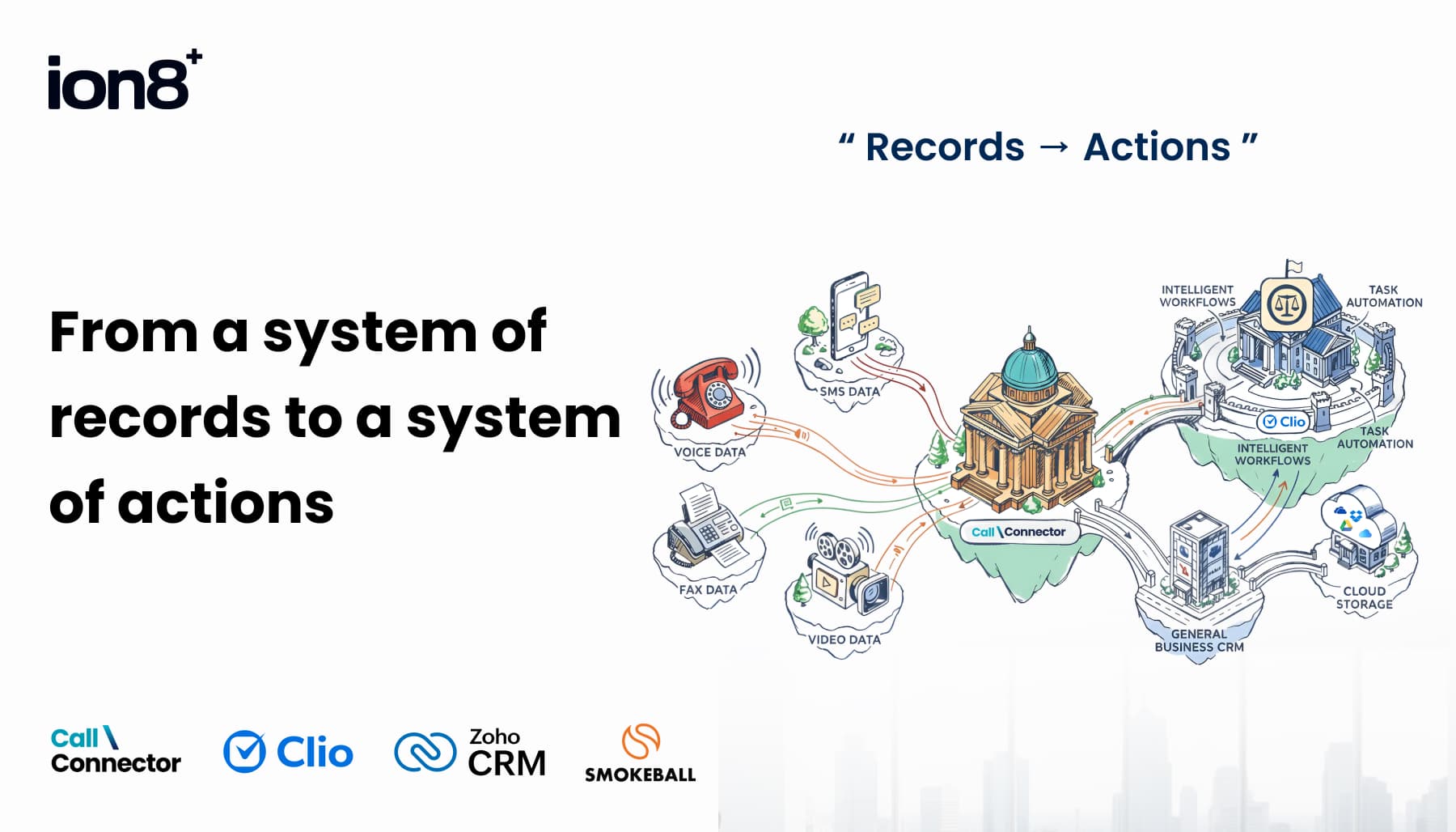
At ClioCon 2025, Jack Newton drew a clear line in the sand: for decades, practice management software has been a system of record, a place to store what happened. With Clio’s acquisition and integration of vLex and Vincent AI, that system of record is now becoming a system of action.
In a system of action, software does not just remember; it helps move work forward, drafting, reminding, orchestrating tasks, and connecting the dots between the business and practice of law. For firms in major metros, this is a huge efficiency gain. For firms in smaller cities and towns across North America, it is existential.
Why This Shift Matters Most Outside Big Cities
In non-metropolitan regions, many firms are still led by “elder statesmen” and long-serving staff who know everything, but who are nearing retirement. Their practices often run on habit and local knowledge instead of standardized, documented processes embedded in systems or learning platforms.
At the same time, there is a growing shortage of new legal talent willing to join firms that lack modern workflows and tools. Younger lawyers and staff are trained on contemporary platforms and expect technology-enabled environments; when they encounter ad hoc processes and legacy software, friction is immediate.
The result is a dangerous combination: aging leadership holding institutional knowledge, thin interest from younger professionals, and firms without the systems needed to safely onboard and retain new talent.
Systems of action need fuel: the “business of law” data Clio’s Intelligent Legal Work Platform, created by uniting its legal operating system with vLex’s global legal intelligence, connects the practice of law (research, drafting, analysis) with the business of law (intake, scheduling, tracking, billing, and more). It is built to shift from static information to AI-powered workflows across the full lifecycle of legal work.
But to truly function as a system of action, Clio needs complete, structured data about the business of law:
- Every intake conversation.
- Every status update.
- Every instruction and expectation shared over voice, video, SMS, or even fax.
If that information lives only in a phone system, a video platform, or someone’s notebook, it cannot drive meaningful action in Clio, or any other platform.
Where CallConnector.ai Fits: Activating All of Your Communications
This is where CallConnector.ai, built by ion8, enters the picture. CallConnector.ai is not just about telephony; it captures all of a firm’s real-time communications — voice, video, SMS, and even fax — and turns them into structured, legal-ready data.
Most firms spend significant time choosing a “perfect” phone system or preferred video platform, then still end up using multiple tools because clients, courts, or counterparties pull them into Google Meet, Zoom, GoToMeeting, and others. CallConnector.ai is designed for that reality:
- It captures audio and transcripts from calls and meetings across platforms, not just one provider.
- It ingests SMS and fax where those channels still matter.
- It applies legal-tuned AI transcription and summarization to generate accurate, usable notes.
Crucially, CallConnector.ai is middleware: it sits between your communication channels and your core systems, and routes data where it will create the most value. From there, CallConnector.ai logs calls, meetings, texts, and faxes into your systems, placing call summaries, full legal-tuned transcripts, and the underlying audio files wherever your firm prefers in its stack, whether that is cloud storage (Google Drive, OneDrive, Dropbox, etc.), directly on the client or matter inside Clio, a general business CRM, or another capable practice management platform.
With the exception of email, CallConnector.ai is there to capture every part of your client relationships and operational communications, ensuring the business of law is fully represented in your systems of action.
ion8 Products as Legaltech Middleware: Beyond Calls
CallConnector.ai is one example of how ion8 builds middleware for legaltech, but it is not the only one. ion8’s products are designed to sit between systems and make them work together around your firm’s real processes.
Another example is CRMConnector, which helps law firms connect their preferred practice management platform to their general business CRM, whether that is Zoho CRM, Salesforce, Pipedrive, Attio, Microsoft Dynamics 365, or others. This lets firms:
- Keep legal work anchored in their practice management system.
- Run marketing, sales, and relationship operations from the CRM their business team prefers.
- Sync the right data between both worlds without double entry.
In short, ion8’s product strategy is to provide the connective tissue —the middleware— that turns a stack of tools into a coherent, firm-specific operating system.
Why Tech Alone Is Not Enough: ion8 as Services + Products
Still, even the best tools do not, on their own, fix succession, talent, or operational fragility. To actually change a firm, there must be guidance, strategy, and structured change management.
That is why ion8 is a services firm with products, not just a product shop. ion8 is a full-cycle business management consultancy built to “ionate", to cause change or transformation. The team works across:
- Process and business strategy.
- CRM and broader software ecosystems.
- Software implementation, integrations, and middleware.
- Training, enablement, and continuous optimization.
The core expertise is bridging process, people, and technology so firms can scale in a way that is actually lived day-to-day, not just diagrammed on a whiteboard.
Fusing The Practice and Business of Law: ion8 + Efficient Legal
To fuse the practice of law with the business of law, ion8 has joined forces with Efficient Legal and Allan Mackenzie. Efficient.Legal focuses on low-risk, end-to-end migrations and automated workflows for law firms of all sizes. Allan Mackenzie, now ion8’s Chief Legal Technology Officer, brings more than 30 years of legal technology and law firm consulting experience around practice management, billing, and document workflows, including speaking and advisory work across the industry.
This combination, ion8’s innovation-led, generalist transformation and engineering capabilities with Efficient Legal’s deep legal-tech and migration expertise, and middleware products like CallConnector.ai and CRMConnector, helps firms:
- Standardize and document operations end to end.
- Safely migrate into modern platforms like Clio.
- Connect practice management with CRM and communications.
- Design workflows that are AI-ready, auditable, and sustainable.
From Fragile Succession To Durable, AI-Ready Firms
For small and mid-sized firms, especially outside major metros, the path forward is not to hope the old model holds. It is to:
- Modernize and document processes so the firm can onboard, train, and retain new talent.
- Adopt systems of action, like Clio + vLex, with the right data flowing from voice, video, SMS, fax, and CRM through tools such as CallConnector.ai and CRMConnector.
- Work with partners who can bridge process, people, and technology through strategy, implementation, and long-term support.
Systems do not replace people, not even those powered by deep, legal-trained AI, but they do dramatically extend the reach and resilience of the people already in the firm. For practices staring down a generational transition and a tight talent market, that extension is not optional; it is how the firm remains competitive in the era Jack Newton describes, where systems of record finally become systems of action.
Connect with us